JOYTLE


AR 3D Experience
Working in pairs, we developed an AR experience in Niantic Studio, where we modelled and textured all 3D assets to build a cohesive immersive environment.
Project Overview
This project is a Web AR 3D experience developed in Niantic that allows users to explore Korean Shamanism within an interactive environment. The goal was to educate audiences about this ancient spiritual practice and its cultural significance in Korea.
To achieve this, we designed a virtual room that can found in a Shaman’s temple (gutdang) where users can explore the space and interact with ritual objects placed throughout the environment, revealing information about their meaning and role in shamanic traditions.
Modelling
For the modelling phase of this project, I worked with Autodesk Maya for the first time, which was a new challenge in my workflow. To help balance the learning curve, my partner assigned me simpler objects to model, though I took on a larger number of assets overall. I created a variety of environment and altar props, including a dresser, low table, wooden screen, altar shelf, and multiple altar objects such as spirit mirrors, talismans, bowls, fruit, and ritual items.


In addition to modelling, I also helped import and arrange these assets into the Niantic scene to build the final environment shown below.

Texturing
For the texturing stage, we used Substance Painter, which was another new tool for me. I began by referring back to the reference images used during modelling and aimed to match the textures as closely as possible to those visuals.

Spirit Mirror Reference

Textured Spirit Mirror

Talisman Reference

Textured Talisman

Wooden Screen Reference
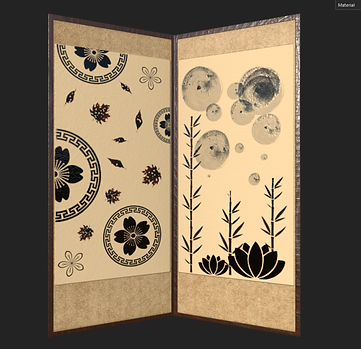
Textured Wooden Screen
During this process, I learned how to use colour IDs to speed up texturing different parts of each model and explored community assets within the software to find suitable materials. I also adjusted various layer settings to refine the look and added details such as dirt, dust, and scratches to give the objects a slightly aged and authentic feel that fits the environment.

Final Touches
For the final touches before submission, we focused on refining the scene and ensuring everything worked smoothly in the AR environment.
We adjusted some colours so that key objects would stand out clearly and not blend into the surroundings, such as differentiating the low table from the floor. During testing, we also found that some textured models had resolutions that were too large and caused crashes in Niantic Studio, so we re-exported them at a lower resolution and reduced the overall size of the environment to improve performance.
In addition, we added lighting and interactive elements, including clickable information markers above selected objects, and imported animations such as the door opening and the information circles to complete the experience.


Here is a video walkthrough of how it looks, however Niantic Studios is closing so the QR code may not work anymore.
Reflection
This project was a rewarding experience and a strong introduction to new tools and workflows. One of the biggest positives was how well my partner and I collaborated as we managed the workload effectively and supported each other throughout the process, allowing us to create a final result that we are both proud of. It was also a valuable opportunity for me to learn and gain hands-on experience with 3D modelling and texturing using new software, which helped expand my skill set.
However, there are a few areas where we could improve. For some assets, such as the window grills and dresser planks, using textures instead of modelling every detail could have saved time and reduced complexity. Additionally, relying on more reference images rather than just one would have helped improve accuracy and variation in the designs.
Overall, I really enjoyed working on this project, and it has sparked a stronger interest in 3D modelling. I would love to continue practising and exploring modelling more in my free time.